

In June 2024, the Gen Z-led protests erupted, fueled by the raw courage of young people refusing to accept governance that ignored their voices. Their audacity was inspiring. But the state’s response was brutal — protestors were met with gunfire, killings, abductions, and surveillance. Dreams were extinguished in a haze of bullets and fear. Young Kenyans took to the streets to demand a better future. Their bravery lit up the country — but the state answered with bullets.
Yesterday, the BBC released a chilling documentary showing us that it’s very possible to identify the exact individuals who murdered the protesters in cold blood. Watching it felt like a punch to the gut — a brutal confirmation of what many already knew but few dared to document: the Kenyan state killed its own children to silence their dreams. And right on cue, one MP is reportedly bashing the BBC for the telling Kenyans the truth, insisting that the documentary is “irresponsible” and urging the government to withdrww their broadcasting license.
This is the reality of democracy in Kenya.
Not the polished speeches.
Not the photo ops.
But blood on tarmac and fear in our streets.
I say this with deep personal reckoning. Just a year ago, I was writing my master’s dissertation, passionately defending Kenya’s democracy. I argued that Western standards unfairly judged African democracies — that we needed room to grow, to define democracy on our own terms. I wanted to believe that Kenya was on the right path, that despite our imperfections, our democratic structure was fundamentally sound.
I was wrong.
The events of the past year — and the state’s violent response — exposed a painful truth: I was defending the idea of Kenya’s democracy, not the reality. I believed in what we could be, but I turned away from what we had become.
And yet, even in this heartbreak, there are reasons for hope.
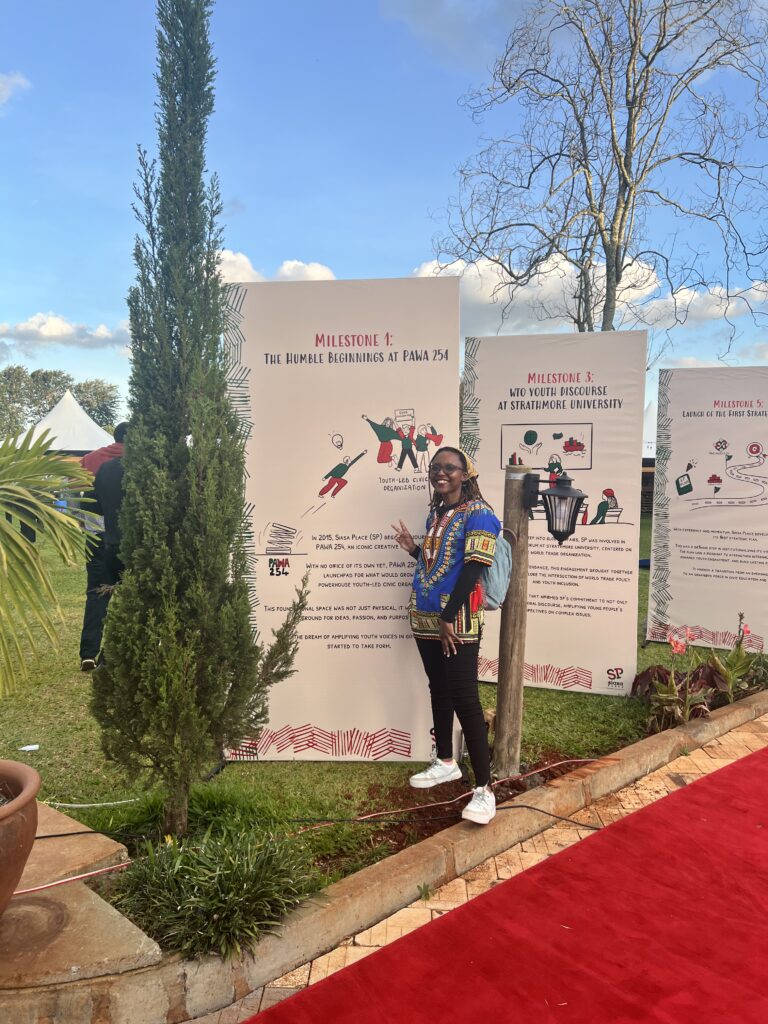
Last Friday, I attended the 10th anniversary celebration of Siasa Place — a youth-led, youth-focused organization that has spent a decade empowering young people, building civic education, and defending the very civic space now under threat.
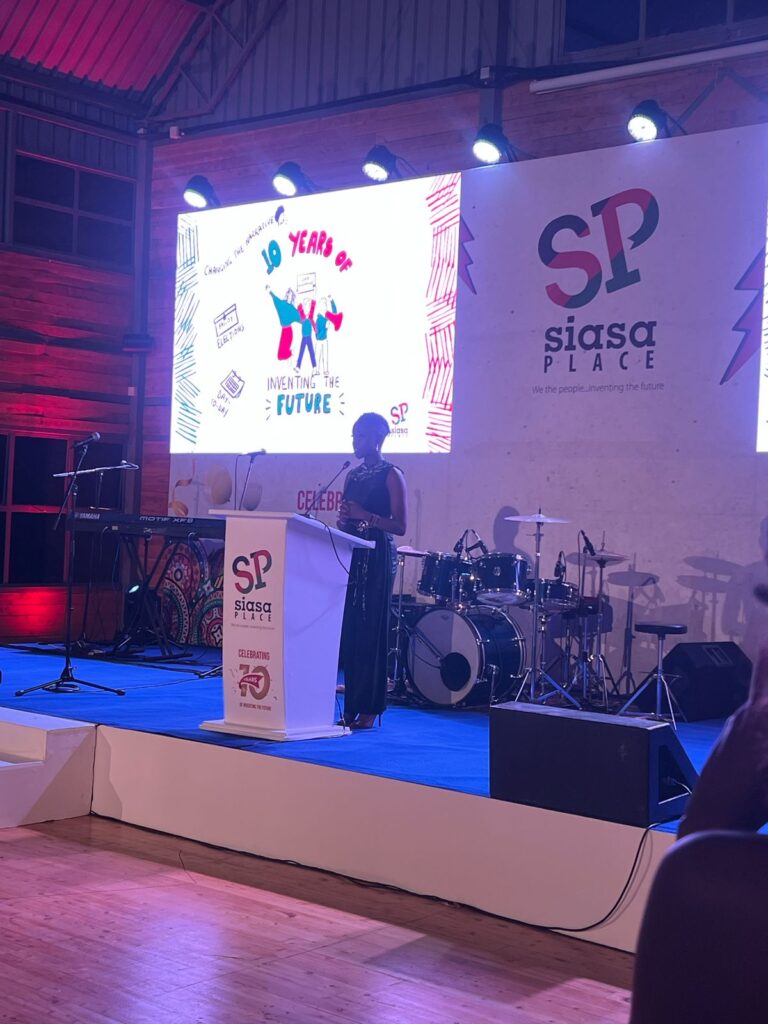
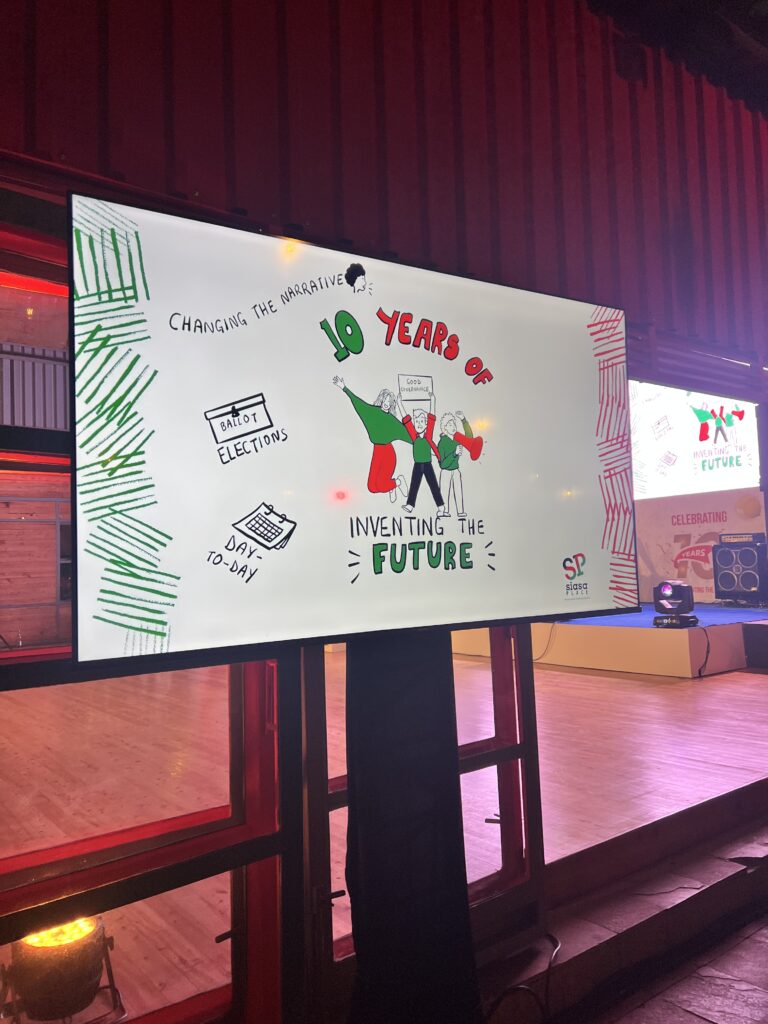
I had the honor of visually doodling their journey — a story of resilience, courage, and unrelenting belief in a better Kenya – inventing the future, as they say. Their work is a living testament that democracy is not built in ballot boxes alone; it is built every day in classrooms, community halls, and conversations where ordinary citizens learn that their voices matter
But here’s the truth:
If we want democracy that actually works for Kenyans — not democracy in theory, not democracy on paper — then we must fight for it.
The Gen Z protesters understood this.
They were willing to risk everything for it.
We owe it to them to continue the fight.
Now is not the time for silence.
Now is the time for audacity.
Audacity to demand better.
Audacity to defend our rights.
Audacity to reimagine and rebuild Kenya’s democracy, no matter how broken it feels today.
The young lives lost must not be in vain.
Their dreams must become our mission.
Because democracy in Kenya will not survive unless we protect it.
Wherever you are, whatever you do, in your own small way, you too can contribute to defending our democracy. As the late Wangari Maathai reminded us,
“It’s the little things citizens do.
That’s what will make the difference.
My little thing is planting trees.”
What’s your little thing?
Until the next reflection – may we honour their courage with ours.
