Portfolio

See our work in action
Here’s a peek into some of the visual magic I’ve created , from live illustration events to visual report summaries and visual facilitation tools. Every piece is designed to make complex ideas clearer, more human, and harder to forget. Our visuals don’t just inform, they foster connection, spark curiosity, and help bridge language or cultural gaps that words alone can’t always cross.
Looking for something specific?
Get in touch if you’d like to see examples of donor reports, policy visuals, or facilitation templates tailored to your sector.

Graphic Recording (Live Illustration)
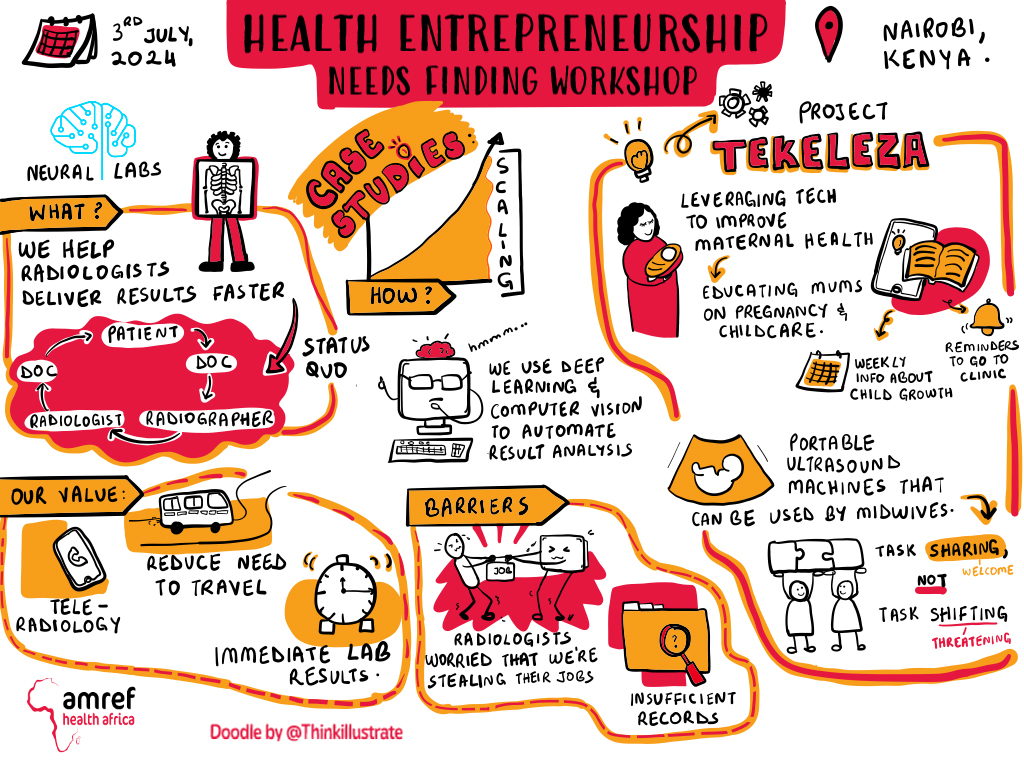
Live, from my desk!
This live illustration was captured remotely during a workshop that brought together healthcare practitioners and health innovation entrepreneurs. The goal? Spot the gaps and spark new ideas for better healthcare solutions.
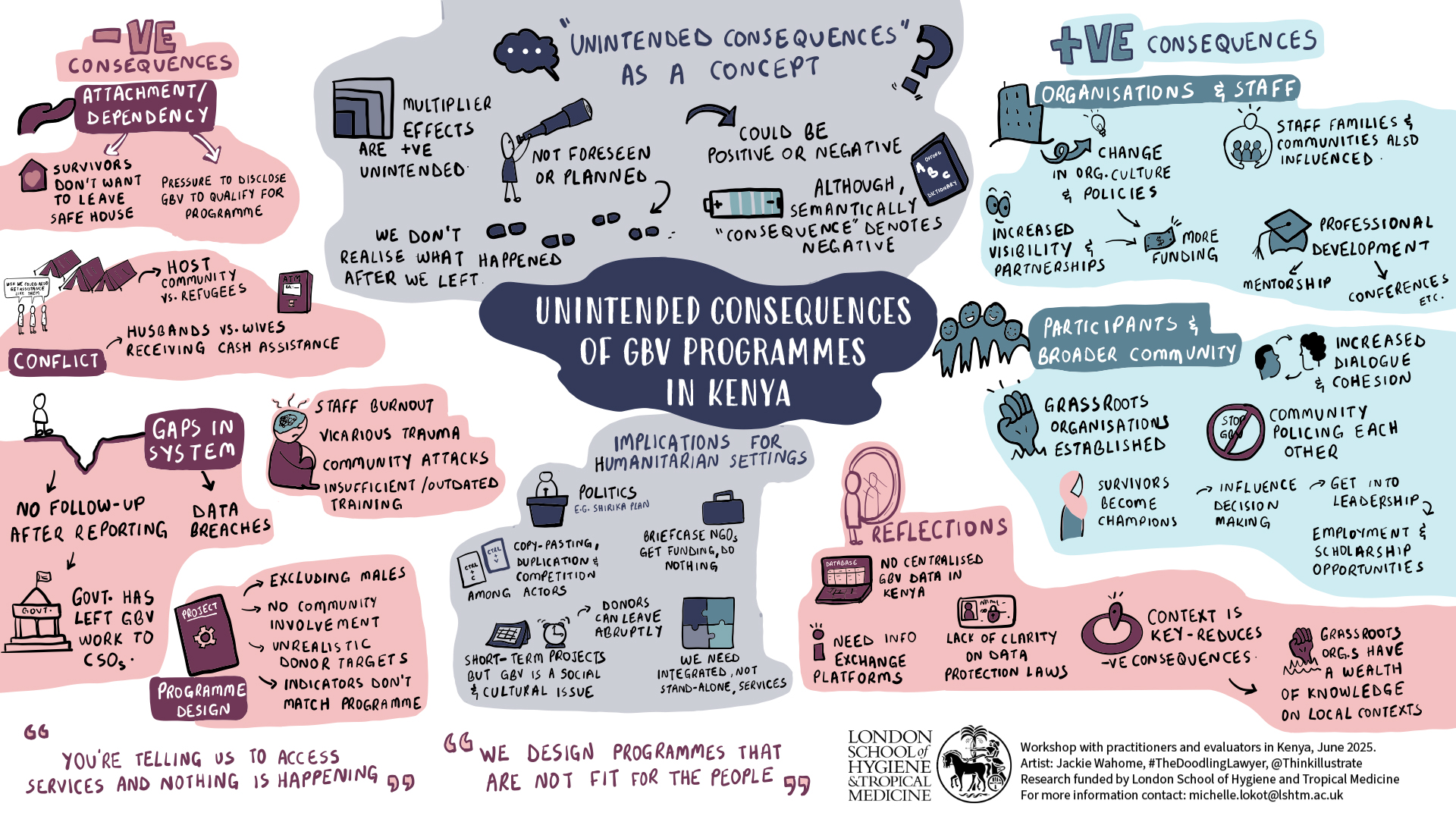
Two FGDs, one big picture
This one’s a fun blend of graphic recording and report visualisation. I attended two separate focus group discussions, took visual notes in real time, then merged them with the final combined meeting notes to create one clear, engaging summary.
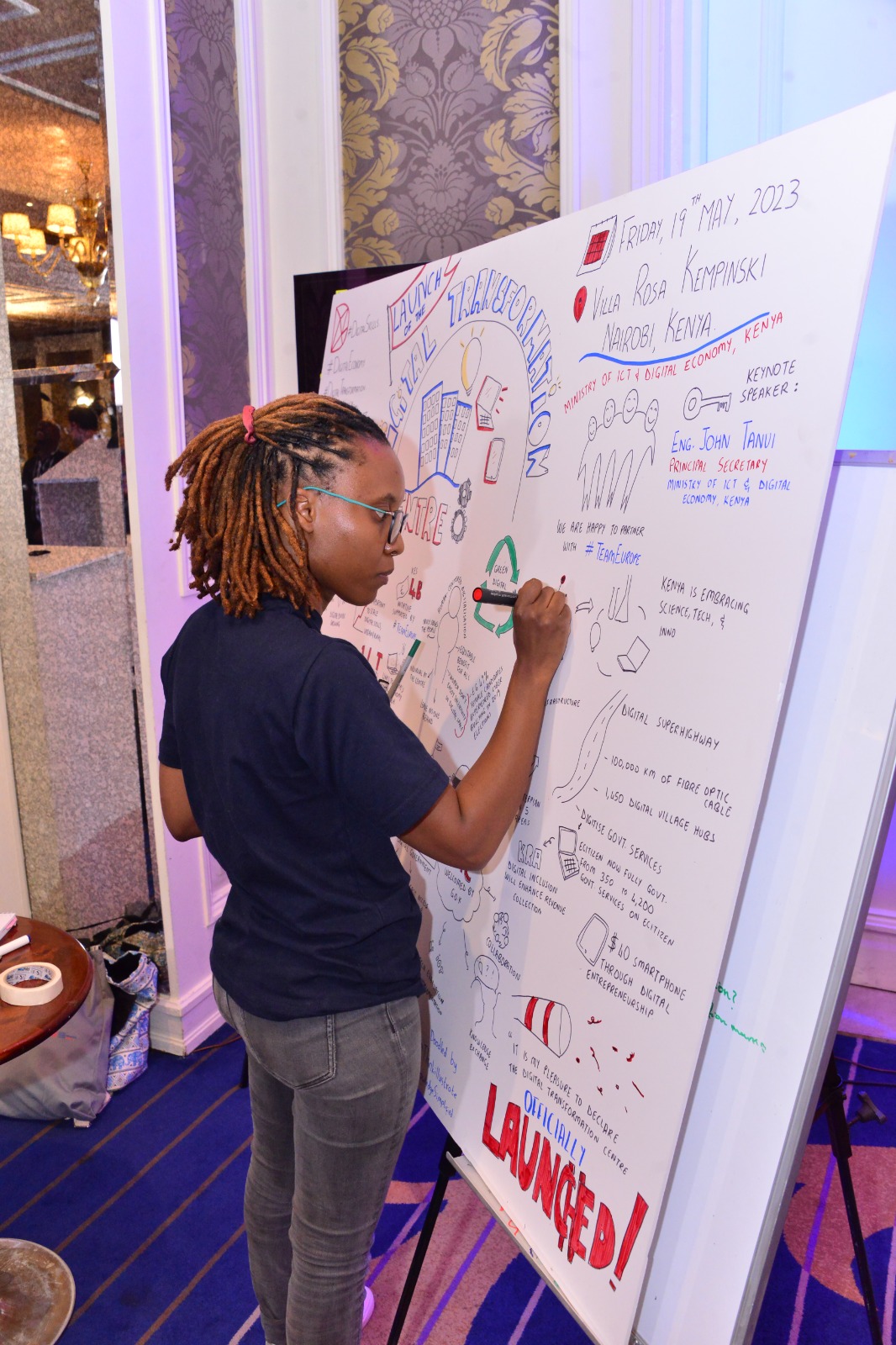
Doodling the digital shift
Here I am in action during the launch of GIZ’s Digital Transformation Centre. The final piece was drawn on sturdy forex board, later framed and installed at the client’s offices as a permanent piece of visual memory.
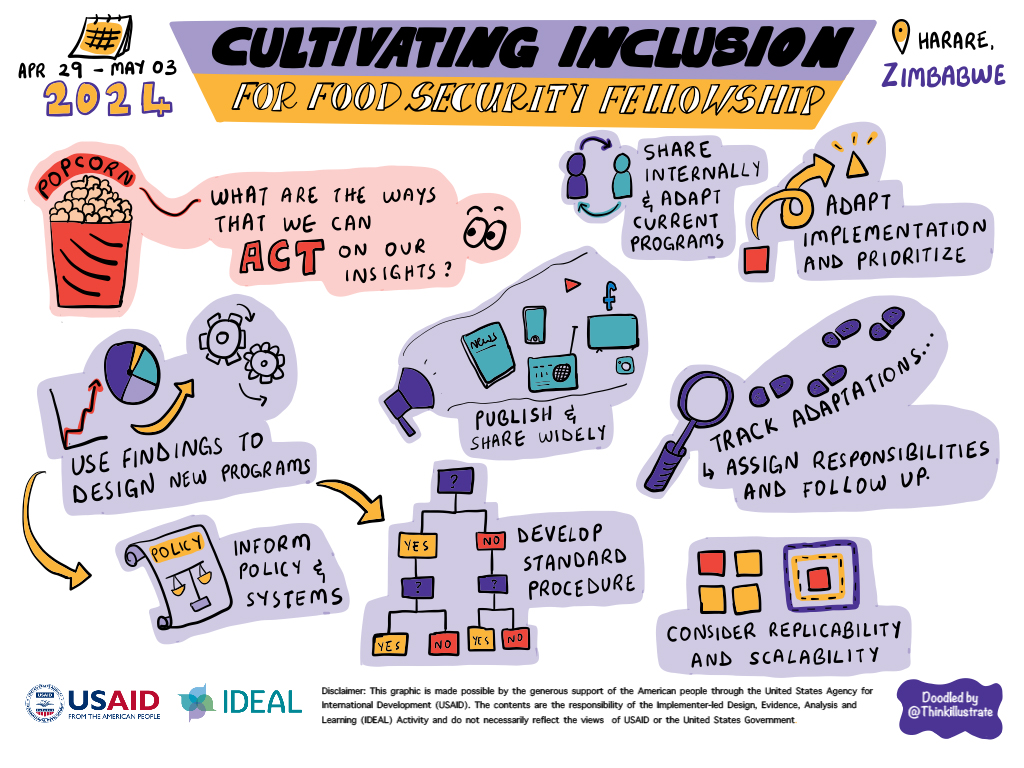
Ideas in motion
This snapshot is from a live illustration captured remotely during a group brainstorming session, helping visualise insights as they emerged and keeping the conversation flowing.
Visual Report Summaries
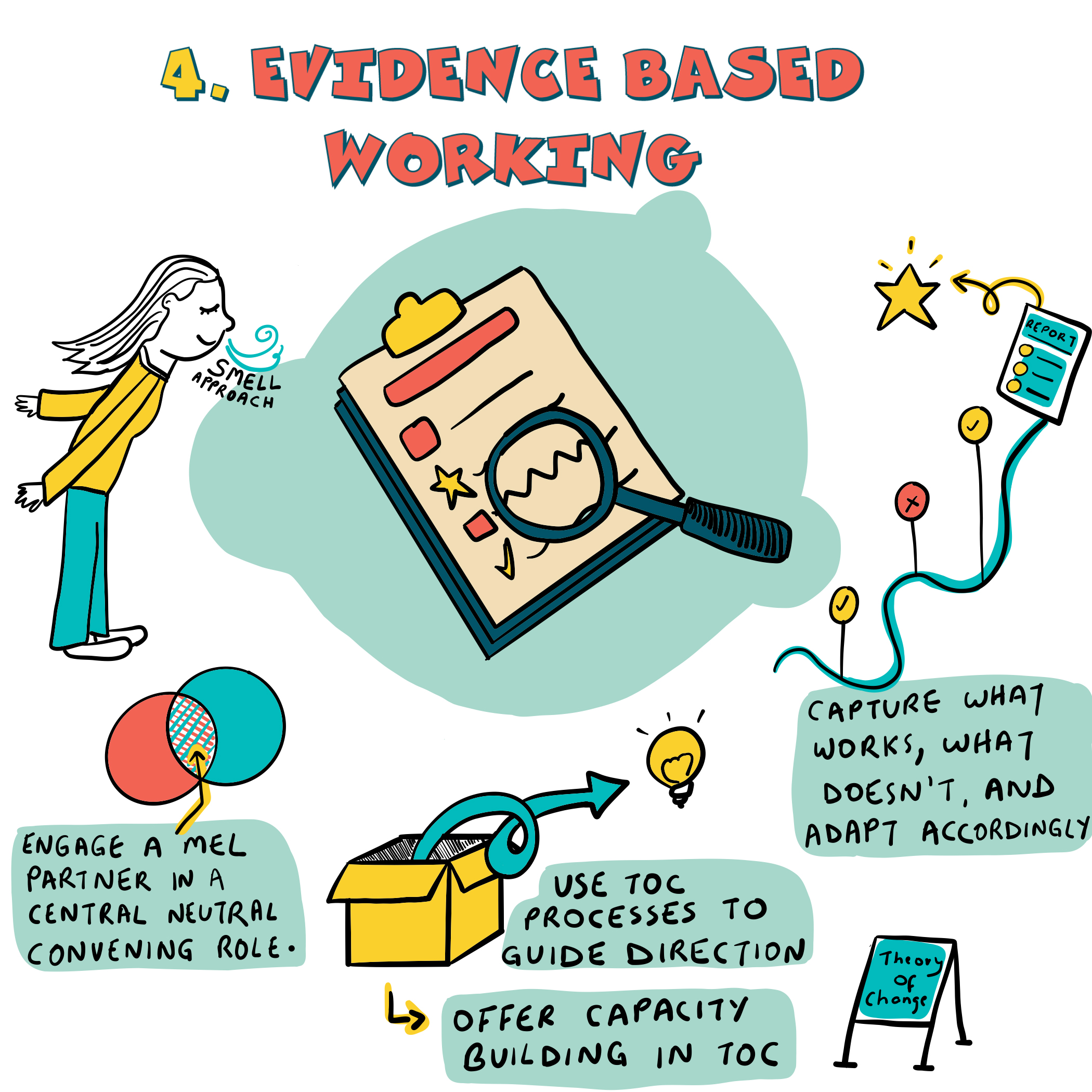
From report to visual clarity
This snapshot is from a live illustration captured remotely during a group brainstorming session, helping visualise insights as they emerged and keeping the conversation flowing.
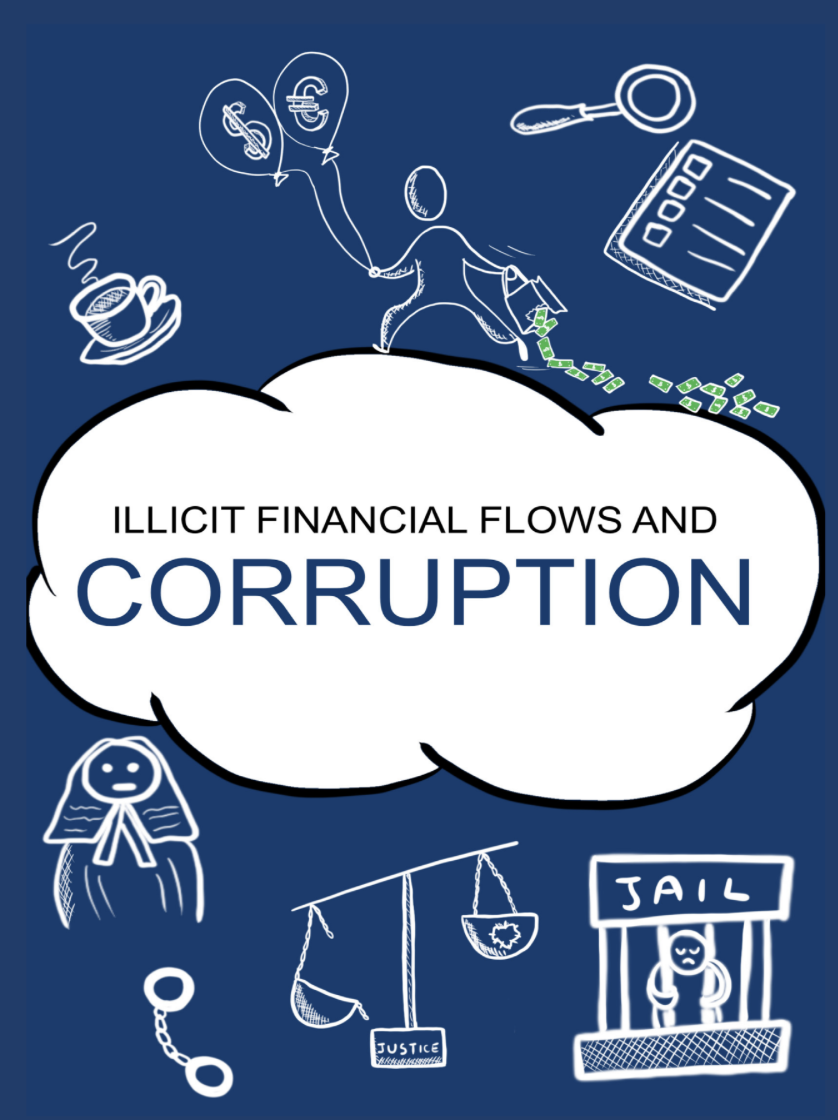
Policy, but make it visual
This is a snapshot from a visualised policy brief on illicit financial flows (IFFs) in Kenya. Pictured here: a section header unpacking the link between IFFs and corruption — part of a broader effort to make technical content more accessible and actionable.
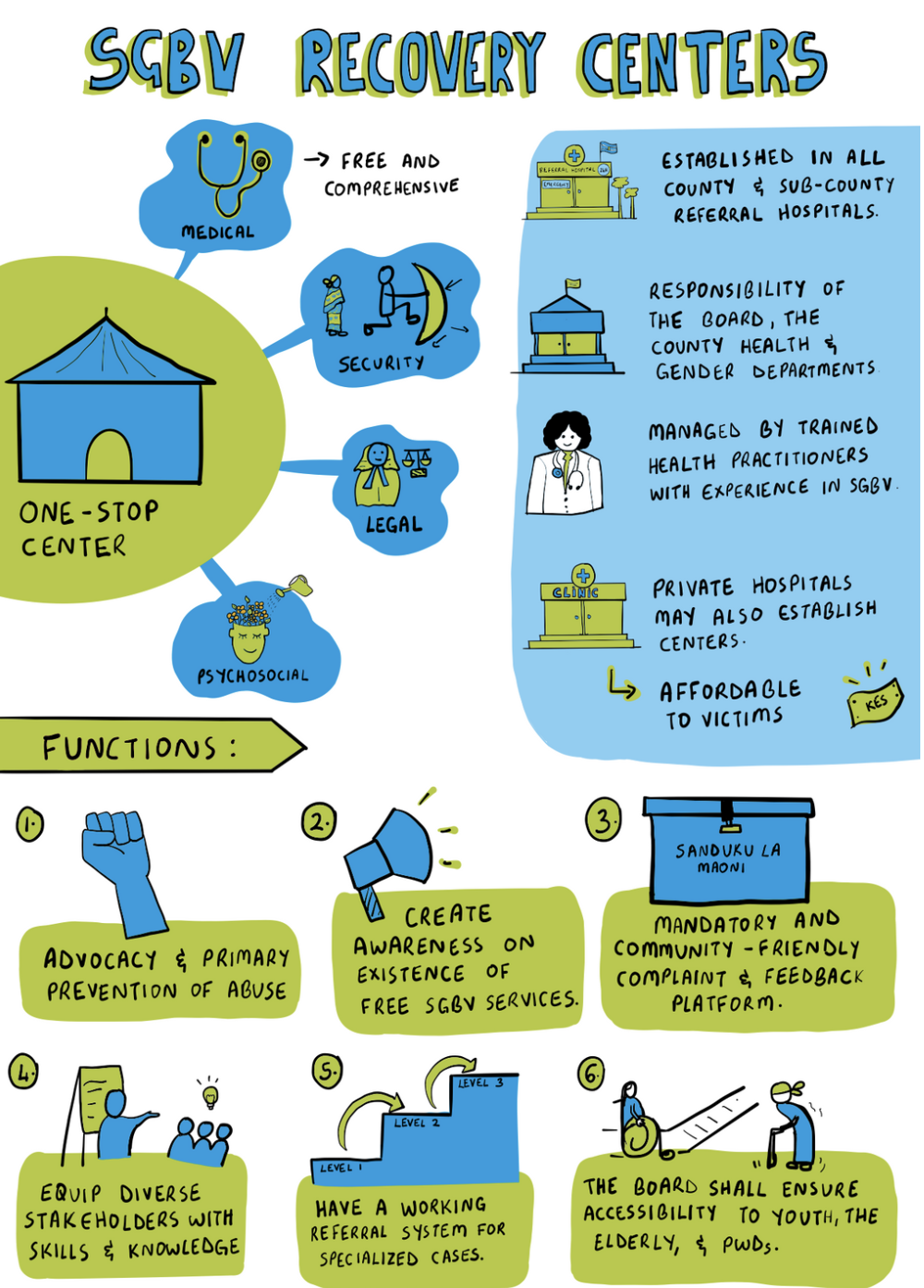
Law meets community
This is part of the illustrated version of the Kwale County Sexual and Gender-Based Violence Act (2023). I turned the full Act into a visual tool that local civic groups now use for grassroots education. There’s also a Kiswahili version, because human rights are multilingual.
100 pages, no problem
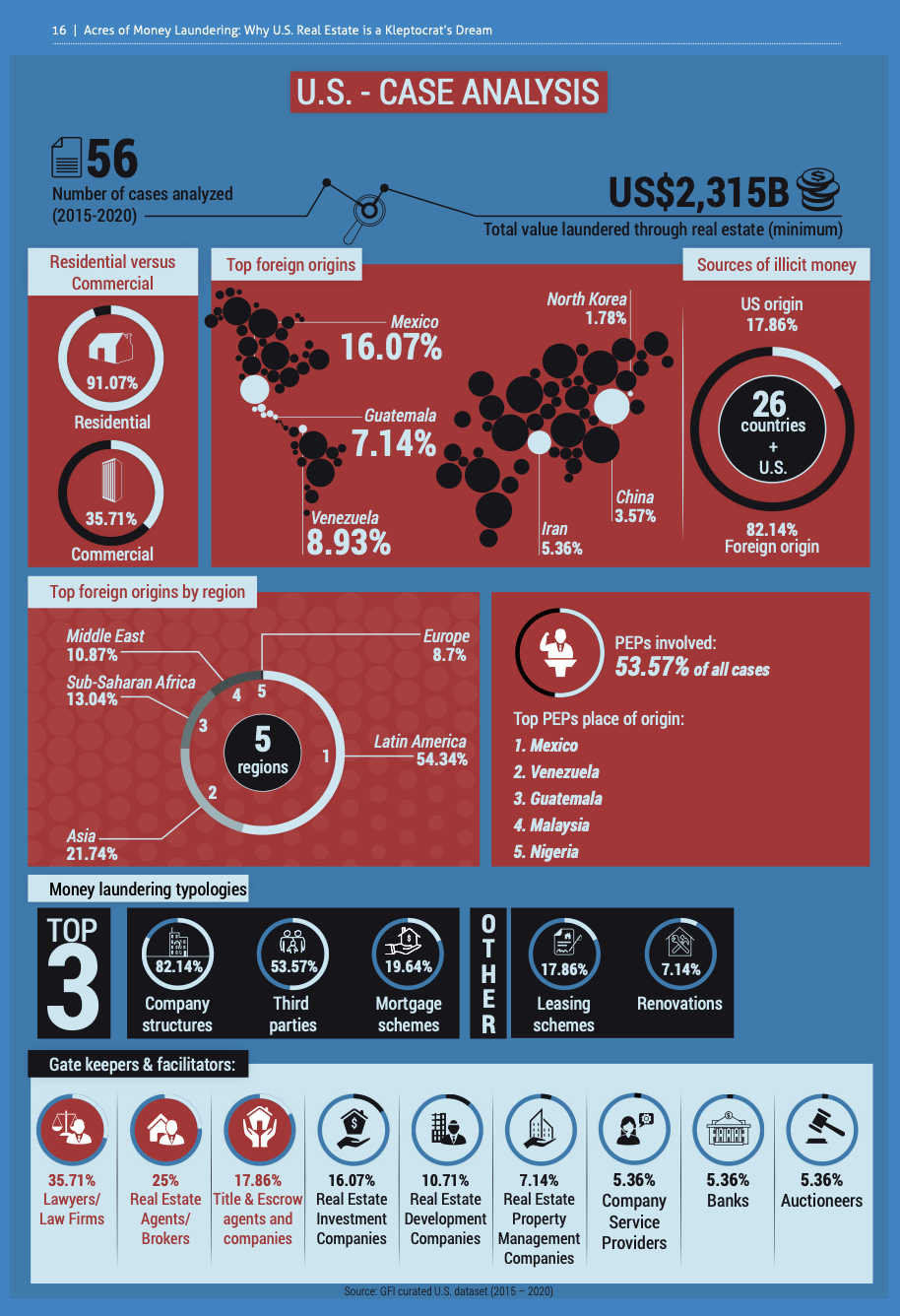
One of the biggest reports I’ve ever visualized; this was part of a 100-page research project by Global Financial Integrity. I created multiple infographics like this one to break down complex findings and case studies into visuals that speak across borders, sectors, and attention spans.
The report went on to inform conversations in the U.S. Congress, proof that clear visuals can move policy, not just people.
FAQs
How is Thinkillustrate different from a design agency?
We start with your strategy, not your brief. Our founder is a lawyer with a decade of experience in human rights, governance, and advocacy, which means we understand the substance of your work before we design anything. We help you figure out what to say, who to say it to, and what format will land, then we produce it. You get a communications partner, not just a service provider.
Why does visual communication matter for rights-based and advocacy work?
Because when information is inaccessible, justice often is too. Dense reports, technical briefings, and complex legal processes become barriers for the very communities they concern. Visual communication removes those barriers — it reaches people across language and literacy levels, builds understanding quickly, and makes your work credible and transparent to the audiences that matter most.
What kinds of projects do you work on?
We work across three areas — and most projects draw on more than one:
- Visual communications and publication design — infographics, illustrated explainers, data visualisations, advocacy toolkits, and report layouts.
- Animation and video — short-form content that makes legal and policy concepts accessible for campaigns, social media, and events.
- Graphic recording — real-time illustrated capture of conferences, workshops, and convenings that gives your event a lasting, shareable visual record.
How do you handle sensitive content — such as survivor stories, conflict contexts, or legally complex material?
Carefully, and from experience. We approach sensitive material with the same principles that guide rights-based practice: dignity, accuracy, and do-no-harm. We do not sensationalise or represent affected communities in ways that strip them of agency. Where projects involve protection-sensitive content, we work within your safeguarding frameworks from the start and we raise those conversations early, not after the fact.
What does working with you actually look like?
It starts with a proper conversation — about your organisation, your audience, and what you need the communication to do. From there we develop a clear proposal, then work in stages: content review, concept development, production, and structured review cycles with your team. We are set up for fully remote collaboration, experienced working across time zones, and used to navigating the approval processes of international organisations. Getting started is as simple as reaching out at hello@thinkillustrate.com.
Do you only work with Kenyan or East African organisations?
Not at all. We work with organisations globally civil society networks, research institutions, advocacy bodies, international development agencies, and parliamentary networks across Africa and beyond. We produce content primarily in English and Kiswahili, work with French-language source material, and coordinate with trusted translation partners for multilingual outputs. Wherever you are based, if your work touches human rights, governance, or access to justice, we would like to hear from you.

Contact
Keystone Park95,
Riverside Drive,
Nairobi
Hours
Monday to Friday
9:00am – 5:00pm
Follow Us
Thinkillustrate
Home
Contact Us
Blog